CUSTOM HEADWEAR / BUYER GUIDE
Beanie Cuff Depth and Fold: Approving a Physical Sample
Review beanie cuff depth, fold and cuff-or-body logo placement. Agree measuring points and the visible layout, then check the physical sample before approval.
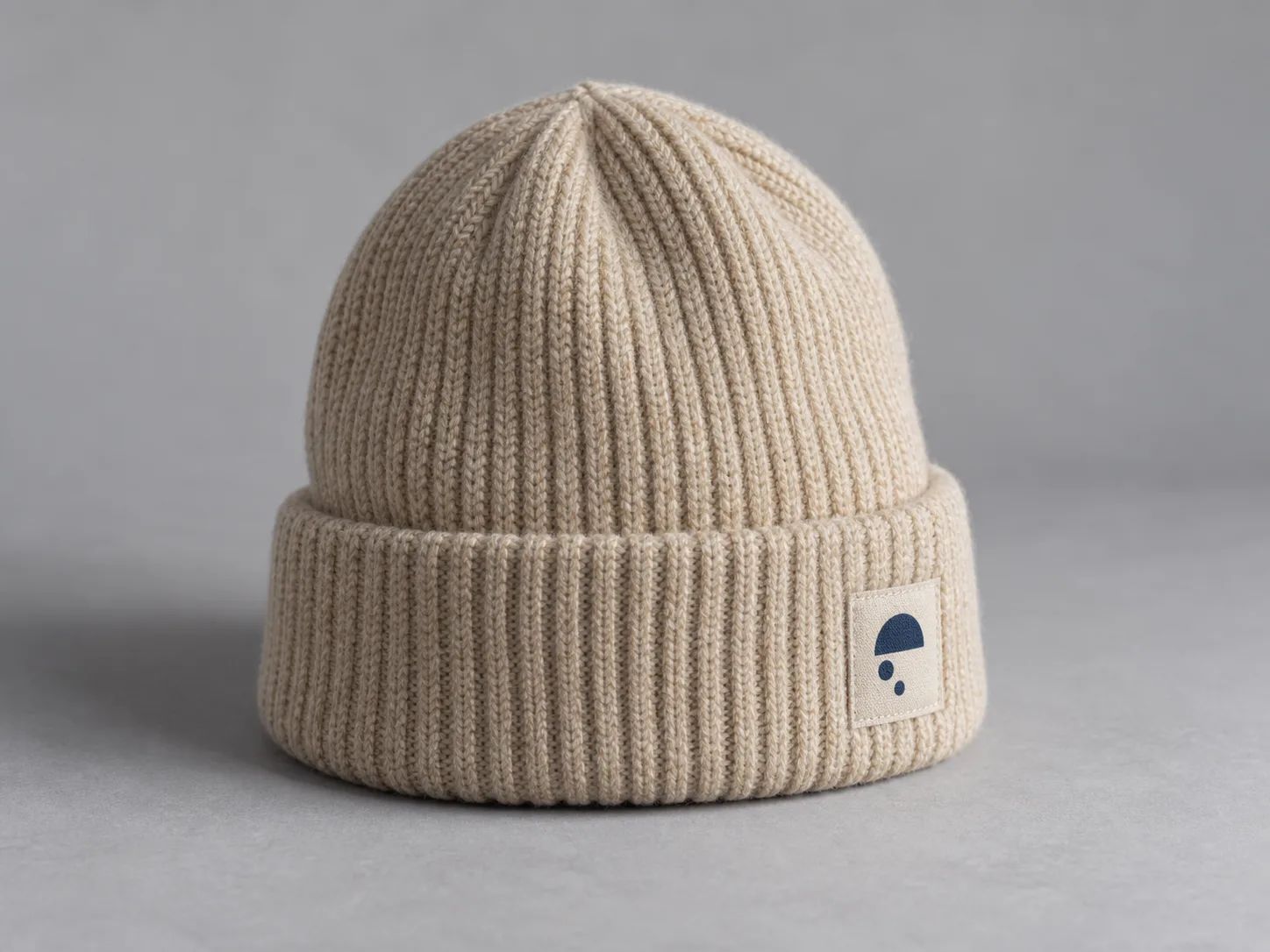
Beanie cuff depth is easier to approve when the buyer and supplier name the same edges, fold and measuring state. “Make the cuff deeper” leaves several questions open: which part is being measured, how many turns are intended, and whether the comparison is flat or worn. Put those answers in the sample brief before asking for a change.
The image above is a generated beanie concept already used on our website. It illustrates a visible folded band, not a real sample or a measurement reference. For your project, check the actual beanie against the current brief and record the cuff geometry separately from material, color, fit and decoration decisions.
Identify the sample and the intended fold
Start with a sample ID, brief version and a named front. Ask the supplier to identify the same beanie in every review view. If there is no obvious front, agree on a removable marker or a diagram reference rather than letting each reviewer choose a different orientation.
Then state whether your design is cuffed or uncuffed. For a cuffed direction, describe the intended turn or turns and ask the supplier to confirm the arrangement on the physical sample. An outside photograph alone may leave the number of layers or the original opening edge hidden. Do not treat two unrelated beanies as a before-and-after folding sequence.
The custom beanie options introduce cuff and knit appearance directions. Keep the actual fold instruction, views and measurement definitions in a versioned first-sample tech pack. A picture can communicate the shape you want; the brief tells the reviewer exactly what to check.
Separate cuff depth from total height
Define each dimension by its edges and path. Visible cuff depth, fold position and total beanie height answer different questions. Agree on their definitions with the supplier before comparing values. If you already have a target, add its units and source; if you do not, request the current sample measurement first.
| Check | Reference to agree | What to record |
|---|---|---|
| Visible cuff depth | Agreed lower and upper boundaries of the visible folded band, at a named front, side or rear location | Folded state, measuring path, units and sample value |
| Fold position | Mark the intended fold line or lines on the unfolded sample or drawing; agree how each is located from the original opening edge | Original edge, marked line and the agreed distance or reference |
| Overall folded height | Lowest folded edge to the agreed crown-top endpoint along the agreed center path in the agreed sample position | Fold arrangement and measuring state alongside the value |
| Overall unfolded height | Original opening edge to the agreed crown-top endpoint, with the cuff opened as agreed | Unfolded state and the same named path where applicable |
Identify on the physical sample whether each visible cuff boundary is a fold, the original opening edge or another construction edge. Do not assume a hidden opening edge is the visible upper boundary. Locate each fold line separately when multiple turns are proposed.
These are suggested definitions for a project discussion, not a standard sizing method. If the supplier uses a different convention, clarify it and put one agreed method in the brief. A front cuff depth does not describe the entire band unless the other locations have also been checked.
Do not calculate an unfolded height or hidden fold allowance from a single visible cuff measurement. The turn arrangement and reference edges must be established on the actual sample. Total height also does not establish circumference or worn fit; those need their own references and checks.
Compare the same measuring state
A flat, relaxed measurement and a worn view are separate records. Choose the state for each check and write it next to the value. For a flat check, agree on the surface, front orientation, how the sample is laid out and how the fabric is smoothed without intentionally stretching it. If the shape cannot be laid consistently, ask the supplier to explain the method and show the measuring path.
Avoid comparing a buyer’s flat sample with a supplier’s beanie on a head or form as though they were measured in the same condition. A worn view may help discuss the intended appearance, but it needs a named setup and cannot replace the agreed flat measurement. Photographs do not establish fiber content, warmth or stretch performance.
When the parties agree a target or tolerance, put the value, units, method and decision owner in the brief. Leave an unagreed value open. This guide supplies no default cuff dimension or universal fit recommendation.
Request views that resolve the fold question
Ask for evidence of the same sample in its identified state. A useful review request can include:
- A straight front view showing both agreed visible cuff boundaries, with the front identified.
- Side and rear views that show whether the agreed cuff line continues as intended.
- An unfolded view that identifies the original opening edge and the proposed fold line.
- A measurement view with the scale aligned to the agreed path, showing both endpoints.
- A worn or supported view only when that appearance is part of the review, with the setup identified.
Request the views needed for your design rather than collecting pictures without a question. If the cuff is meant to vary around the hat, name the locations and intended relationship instead of calling any difference a defect. If a view hides a required endpoint, keep that check open and ask for clearer evidence.
A 3D hat concept can help discuss the visual direction. It does not provide the sample’s fold allowance, dimensions or approval. The customization overview is the next step for discussing your design and what evidence is needed.
Choose cuff or body placement in the final folded state
Choose the decoration area on the beanie as it is intended to be worn and folded. “Front logo” does not say whether the design belongs on the visible cuff face or on the exposed body above it. Identify the front, current fold arrangement and artwork version before asking for a placement proof. Use artwork you own or are licensed to use.
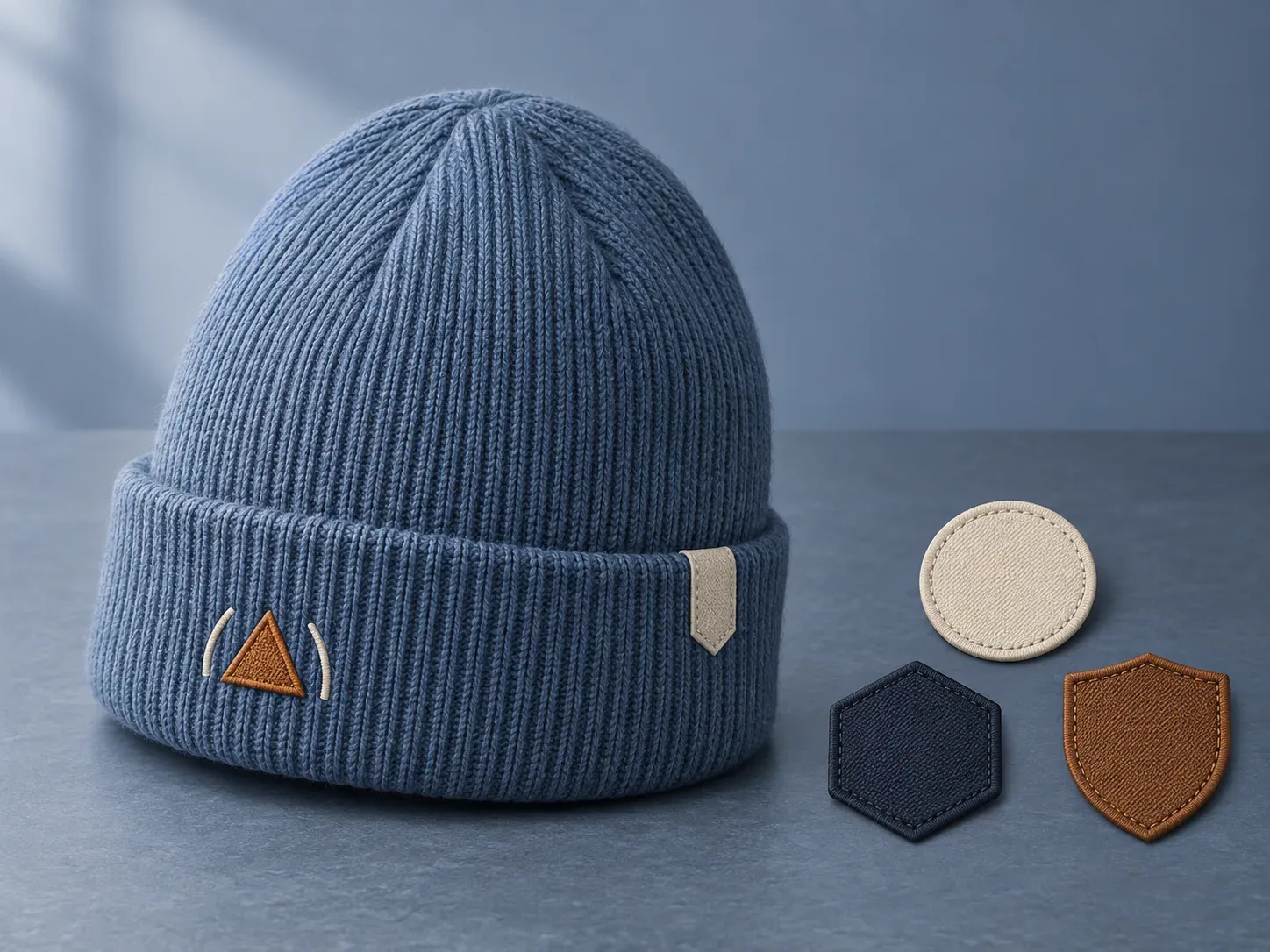
Mark the intended visible area on a copy of the current beanie reference or drawing. For a cuff request, identify the outward-facing part of the folded band. For a body request, identify the exposed area beyond the agreed cuff boundary. If an uncuffed state is intended, mark its opening edge and reading view separately. A position on a flat, unfolded drawing may not describe what remains visible after the fold is made.
| Placement choice | Questions to settle on your sample |
|---|---|
| Visible cuff face | Which part of the folded band should carry the decoration? Mark the finished artwork outline and up direction on that face, relative to the identified front and agreed cuff boundaries. |
| Exposed body | Which area should remain exposed with the intended fold in place? Mark the artwork outline and the boundary used as its placement reference. Check whether the agreed fold covers any required part of the design. |
| More than one wearing state | Which state controls the main placement decision, and what should be visible and readable in each additional state? Ask for a separate layout and supplier response rather than assuming one position works in every arrangement. |
Neither cuff nor body is a universally better location. Decoration feasibility depends on the actual beanie and artwork. Ask the supplier to confirm the proposed method and finished arrangement, then review the physical sample; these illustrations do not establish embroidery suitability, comfort or durability.
Keep the artwork point and beanie reference together
Name what is being positioned and what it is positioned from. Mark the finished decoration outline, its selected edge or defined center, and the agreed beanie reference point. State which view the artwork should read from and add an up arrow. Do not silently use the apparent center of a rib or a camera image as the front reference.
Include units and the agreed measuring path and sample state with any target. Keep artwork size, position and orientation as separate fields. A relaxed-flat placement record and a worn appearance view answer different questions; identify each setup rather than converting image pixels into a physical offset. Leave dimensions and method suitability open until the parties agree them.
For a label, the label fold and reading direction checklist distinguishes its complete drawing, attached visible face and attachment area. Use it for those details after choosing the beanie location. A separate patch shape in a concept image does not show how its attached face will sit or read.
Recheck the visible layout after a change
A changed fold or artwork layout reopens the placement check. Request an overall folded view that locates the decoration and a close view of the same sample revision showing its visible boundary and reading direction. Ask for an unfolded or inside view only when it resolves a specific hidden-face or attachment question. Keep the physical piece as the approval reference.
If cuff depth, fold arrangement, artwork size, orientation or location changes, review the affected visible area again. Record which part must remain visible, whether the artwork reads in the intended view and which dimensions or attachment questions still need an answer. Accepting a placement does not approve material, attachment or every wearing state.
A focused request might read:
Beanie sample [ID/revision], artwork [version], front identified. Intended fold: [current agreed arrangement]. Placement area: [visible cuff face / exposed body]. Please show [artwork point] relative to [beanie reference] in [agreed state and measuring method]. Include an overall folded view and a matching decoration close-up. Keep any unagreed size, placement or attachment decision open for review.
These are fields for your brief, not a specification for the illustrated beanie. Keep the chosen location and visible-layout record with the versioned sample brief. If the fold changes later, update that record and recheck the same questions on the revised sample.
Close each cuff decision against the current brief
Record what passed, what should change and what remains open. Keep the cuff measurements and matching views with the sample ID and brief version. If you request a different fold position, ask for a revised folded view and the affected measurements; do not assume the previous total-height check still describes the changed sample.
| Review item | Decision to record | Evidence needed to close it |
|---|---|---|
| Fold arrangement | Accepted, change requested or open | Confirmed turn arrangement and identified sample views |
| Cuff depth at named locations | Accepted against an agreed target, change requested or awaiting measurement | Value, units, endpoints and measuring state |
| Folded and unfolded height | Checked separately or left open | Each state’s identified edges and measuring path |
| Next revision | Current decision owner and requested change | Revised sample ID, brief version and matching evidence |
Here is an example request, not a real order or a preset specification:
Please review sample B, revision 2, with the front marked. Confirm the turn arrangement and show the visible cuff depth at the front and rear using our agreed relaxed-flat method. Include the unfolded opening edge and marked fold line. Keep the depth decision open until we agree the target and review the measurements. If the fold changes, recheck the overall folded height on the revised sample.
Record fold geometry and decoration layout as separate decisions. A change to one can require rechecking the other; approving the cuff does not settle every artwork or attachment question.
To start a project, send Alex your beanie brief with the design direction, estimated quantity, current references and open cuff questions. The project brief checklist helps organize the first message. Keep unknown measurements open so the discussion can produce a clear physical-sample review instead of a guess from a picture.